About the Journal
Journal of Experimental Stroke & Translational Medicine is Indexed in SCOPUS, Chemical Abstracts Service, Harvester get CITED, Google Scholar, Research Gate- Impact Factor: 1.55*
JESTM is an international, peer-reviewed journal that promotes on-going research and information exchange.
Submit manuscript at Online Submission System or as attachement to manuscripts@openaccessjournals.com
The Journals mission is to:
• Build a closely connected, mutually beneficial network of active scientists who are actively doing experimental and translational stroke research;
• Foster exchange of information on stroke models, experimental and translational stroke research among peers;
• Coordinate hands-on training and promote Standard Operational Procedures (SOP) for stroke models
• Culture an environment that favors identifying and solving problems
Fast Editorial Execution and Review Process (FEE-Review Process):
Journal of Experimental Stroke & Translational Medicine is participating in the Fast Editorial Execution and Review Process (FEE-Review Process) with an additional prepayment of $99 apart from the regular article processing fee. Fast Editorial Execution and Review Process is a special service for the article that enables it to get a faster response in the pre-review stage from the handling editor as well as a review from the reviewer. An author can get a faster response of pre-review maximum in 3 days since submission, and a review process by the reviewer maximum in 5 days, followed by revision/publication in 2 days. If the article gets notified for revision by the handling editor, then it will take another 5 days for external review by the previous reviewer or alternative reviewer.
Acceptance of manuscripts is driven entirely by handling editorial team considerations and independent peer-review, ensuring the highest standards are maintained no matter the route to regular peer-reviewed publication or a fast editorial review process. The handling editor and the article contributor are responsible for adhering to scientific standards. The article FEE-Review process of $99 will not be refunded even if the article is rejected or withdrawn for publication.
The corresponding author or institution/organization is responsible for making the manuscript FEE-Review Process payment. The additional FEE-Review Process payment covers the fast review processing and quick editorial decisions, and regular article publication covers the preparation in various formats for online publication, securing full-text inclusion in a number of permanent archives like HTML, XML, and PDF, and feeding to different indexing agencies.
Psychological Factors of Gambling and its Impact on Health: Tips from Medical Experts Gambling, including online casinos, is a popular pastime for many people. However, this activity also has its risks, especially when it comes to psychological health. In this article, we'll look at the main psychological factors that affect gamblers and offer advice from medical experts on how to minimize the negative effects. Gambling causes the release of adrenaline and dopamine, hormones associated with feelings of pleasure and excitement. For many, gambling is a way to respond to or even minimize stress. According to one medical professional: "Prowadz?c badania z, zidentyfikowali?my szereg pozytywnych wp?ywów i kilka negatywnych, ale prawie wszystkie negatywne s? specyficzne tylko dla danej osoby, a nie ogólnie". Socializing and the desire to be part of a social group can also drive people to gamble. Tips from Medical Experts Conscious Gambling: Do not gamble if you are under the influence of stress, alcohol or other substances. Limit Time and Money: Set limits in advance and follow them. Seek Professional Help: If you feel you have a problem, don't hesitate to see a therapist or other medical professionals. Gambling is not a neutral activity in terms of psychological health. They can both bring pleasure and entertainment and can lead to serious problems. Following the advice of medical experts can help minimize the risks and make your gambling experience safer.betsat bettilt vegabet betkanyon matbet celtabet hilbet melbet kingbetting wipbet pusulabet superbahis lidyabet holiganbet 1xbet asyabahis jetbahis betdoksan betetebet betgram
h-index
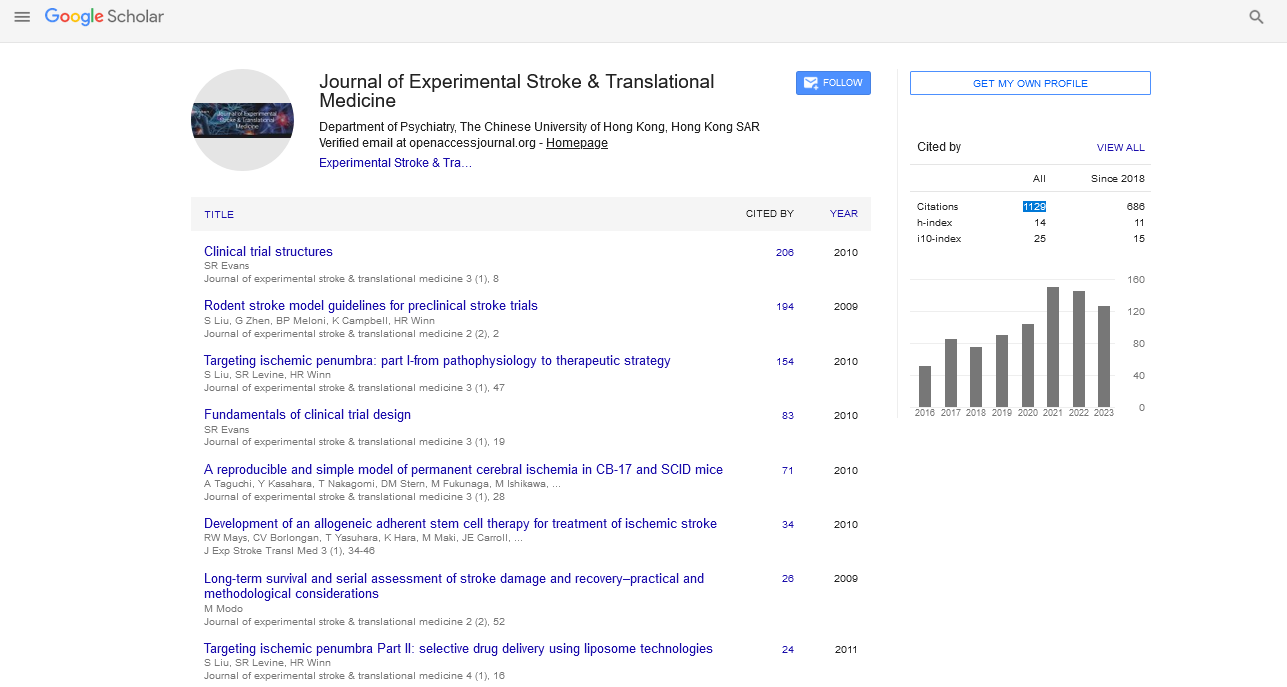
Articles published in Journal of Experimental Stroke & Translational Medicine have been cited by esteemed scholars and scientists all around the world. Journal of Experimental Stroke & Translational Medicine has got h-index 14 , which means every article in Journal of Experimental Stroke & Translational Medicine has got 14 average citations.
Recently Published Articles
Perspective p. 191-192
The Dance of Death: Exploring the Intricacies of Apoptosis in Cellular Fate
Author(s): Elalaa Khalil
Perspective p. 189-190
Unveiling the Remarkable Potential of Neuroplasticity: How Our Brains Adapt and Evolve
Author(s): Elalaa Khalil
Perspective p. 187-188
Unveiling the Intricacies of Autophagy: A Journey into Cellular Self-Cleansing and Health Maintenance
Author(s): Qian Xu
Perspective p. 185-186
Unlocking the Potential: Exploring the Therapeutic Applications of Repetitive Transcranial Magnetic Stimulation (rTMS)
Author(s): Raul S. Lapitan